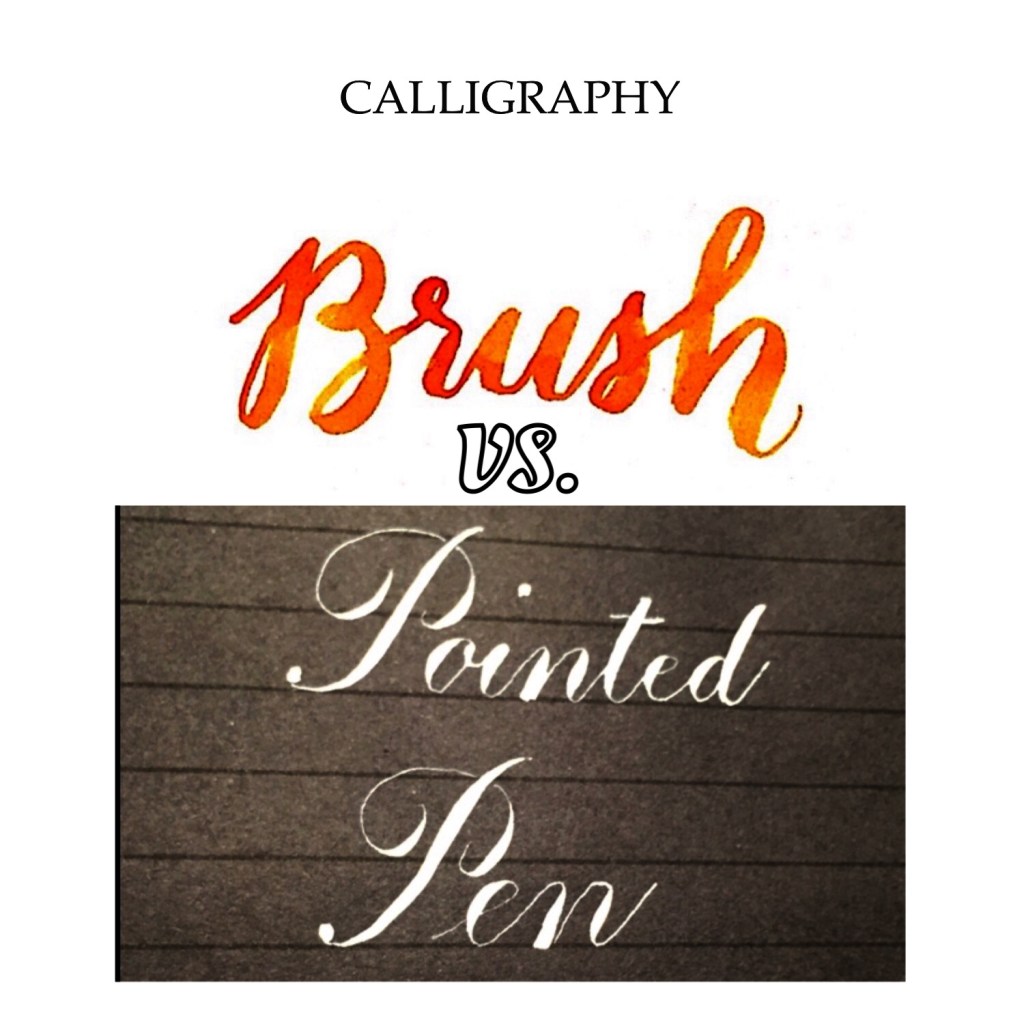
What got me back to calligraphy was the graceful combination of thick and thin lines that create letters and flourishes when you write. So when I decided to take my first couple of workshops, I didn’t bother thinking that I need to just start with one. I wanted to learn both right away since I knew they would produce similar results.
The first workshop I attended was a basic pointed pen calligraphy class. I thought my letters looked horrible compared to what I imagined they should be. But hey, I gotta cut my beginner self a little slack, right? My major accomplishment that day was that I didn’t smear any ink. For a lefty, that was quite an acomplishment. So…Yay for me!
I kept practicing after class, but for some reason, I wasn’t as into it as I thought I would be. My letters didn’t look quite right. I was struggling with underhand writing. My Leonardt Principal nib was blobbing all over my paper. I decided my G nib was my only friend. I ended up not picking up my pen as often as I should.
Two weeks after my basic pointed pen class, I attended my first brush calligraphy class where we used a water brush and watercolor to write. It was a little bit more challenging for me, to be honest. I had to hold my pen differently and was smearing paint all over my worksheets. I had to unlearn what I did during pointed pen class. Again, watercolor wasn’t working that well for me.
I came across a couple of online shops selling calligraphy supplies and decided to try out different kinds of brush pens. This was when things started getting more interesting.
I found new hope with brush pens as they dried faster than watercolor. It helped me a lot with the smearing problem. I found firm tipped pens (e.g. Pentel Fude Touch, Kuretake Fudebiyori, Tombow dual brush pens, Zig Brushables) that gave me a good amount of flex without making me lose control. I learned how to control my strokes better and managed to create more decent letters each day.
When I felt comfortable with my firm tip brush pens, I started trying out softer/paint brush-like tips to write (e.g. Zig Clean & Color, Zig Wink of Stella/Luna). I even went back to using the water brush. The progression helped me get a better feel of my letter forms, hand movement, and proper pressure and release.
I eventually got back to using my pointed pen a few months later and it was easier the next time around. The muscle memory of creating letters with the brush pen has translated into better pointed pen output.
So…do you start with pointed pen or brush pen? For any beginner who wishes to learn script for the first time, I usually suggest brush pens first and work their way up to using a pointed pen. I personally found this route easier and I hope that it would help out aspiring calligraphers (both left and right-handed). Once you get the hang of each pen, it will be much easier to switch between them.
I recognize that each one has their own preferences and learning style. I am not restricting you to this suggestion, but I hope you would consider trying it. It worked for me and I hope it will also be helpful to you. Whatever learning option you choose, the key always is practice. Practice regularly.
Happy writing!
 leftylligraphy
2 responses to “Brush Pen vs. Pointed Pen. Which one should I learn first? ”
My first calligraphy workshop was a gift so I didn’t get to choose which instrument to try first. Be that as it may, I fell in love with the pointed pen– even if it didn’t love me back. You are so right about regular practice. It’s easy to be discouraged when the output is not what you were hoping for. But practice does help you get there so you just have to power through.
P.S. Thanks for introducing me to the Pentel Fude Touch. I still think it’s the most agreeable of them all. 🙂
LikeLike
I say the pointed pen is loving you back now! You could write miles of lovely text. 😊 And I’m glad you’re loving the fude pens as much as I do. 😊
LikeLike